
Roadmap
ToggleFact
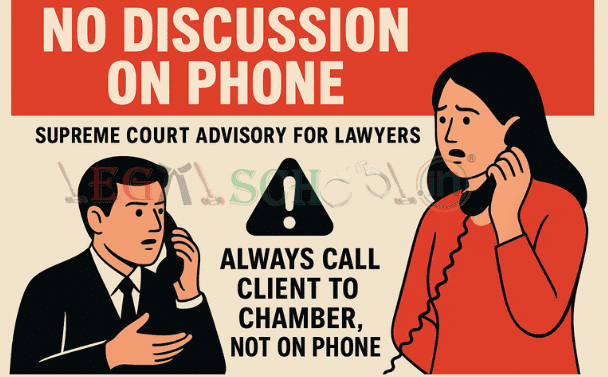
In a recent observation, the Hon’ble Supreme Court of India in October 2025 emphasised that advocates must refrain from offering legal advice over telephone calls and instead invite clients to their chambers for a proper, structured consultation. These advisory aims to protect both the integrity of legal practice and the rights of clients, ensuring that legal advice remains accurate, documented, and professional.
Why Phone-Based Legal Advice is Risky
The Supreme Court cautioned that telephonic discussions:
- It can be misunderstood or misquoted, leading to misrepresentation of facts.
- It may be used as evidence in court against the lawyer or client.
- Lacks the depth, clarity, and formality required in legal consultation.
Legal matters often involve complex facts, documents, and legal scrutiny that cannot be evaluated over a brief call. A lawyer’s opinion must be based on careful examination—not guesswork or assumptions.
Sanctity of Legal Advice: A Professional Responsibility
In the digital era, clients may expect quick opinions through calls or messages. However, law is not instant. It requires:
- Detailed fact analysis
- Document verification
- Legal reasoning and interpretation
A hurried phone call can compromise justice and place the lawyer at professional risk. A chamber consultation ensures confidentiality, clarity, and accountability.
Upholding the Dignity of the Legal Profession
This Supreme Court observation serves as a reminder for legal professionals to:
- Maintain professional ethics
- Avoid uninformed or incomplete advice
- Protect themselves from legal liability
True legal advice must be structured, informed, and responsible. Meeting clients in chambers protects the integrity of the profession and ensures justice is not compromised by casual communication.
Conclusion
Legal advice is not a casual conversation—it is a solemn duty. Let every advocate honour the responsibility by insisting on proper consultation, preserving the trust and dignity attached to the noble legal profession.
2 Responses
Dignity of the professionals is maintained when they understand the profession itself
True.
But the sad part is clients do not understand this. Many a times it has happened that clients demand legal advice over phone. They are either too busy or lazy to visit the lawyer’s chamber for consultation. Then there are govt. officers who consider themselves very entitled and, therefore, will not personally visit the counsel. Everything, right from providing documents to signing on the petition, to payment of fees is done via an intermediary, without a single direct interaction. Can lawyers be blamed for such an attitude?
Ask any Notary Public; when a rent agreement is executed and the deed is notarized, it is the lawyer who signs on the Notary’s register, because the parties are either too busy or too lazy to put their respective hands on the said register.
I could go on…